BRACY
ESSAY
UX Research
E-Commerce Cart Abandonment Case Study
The Problem:
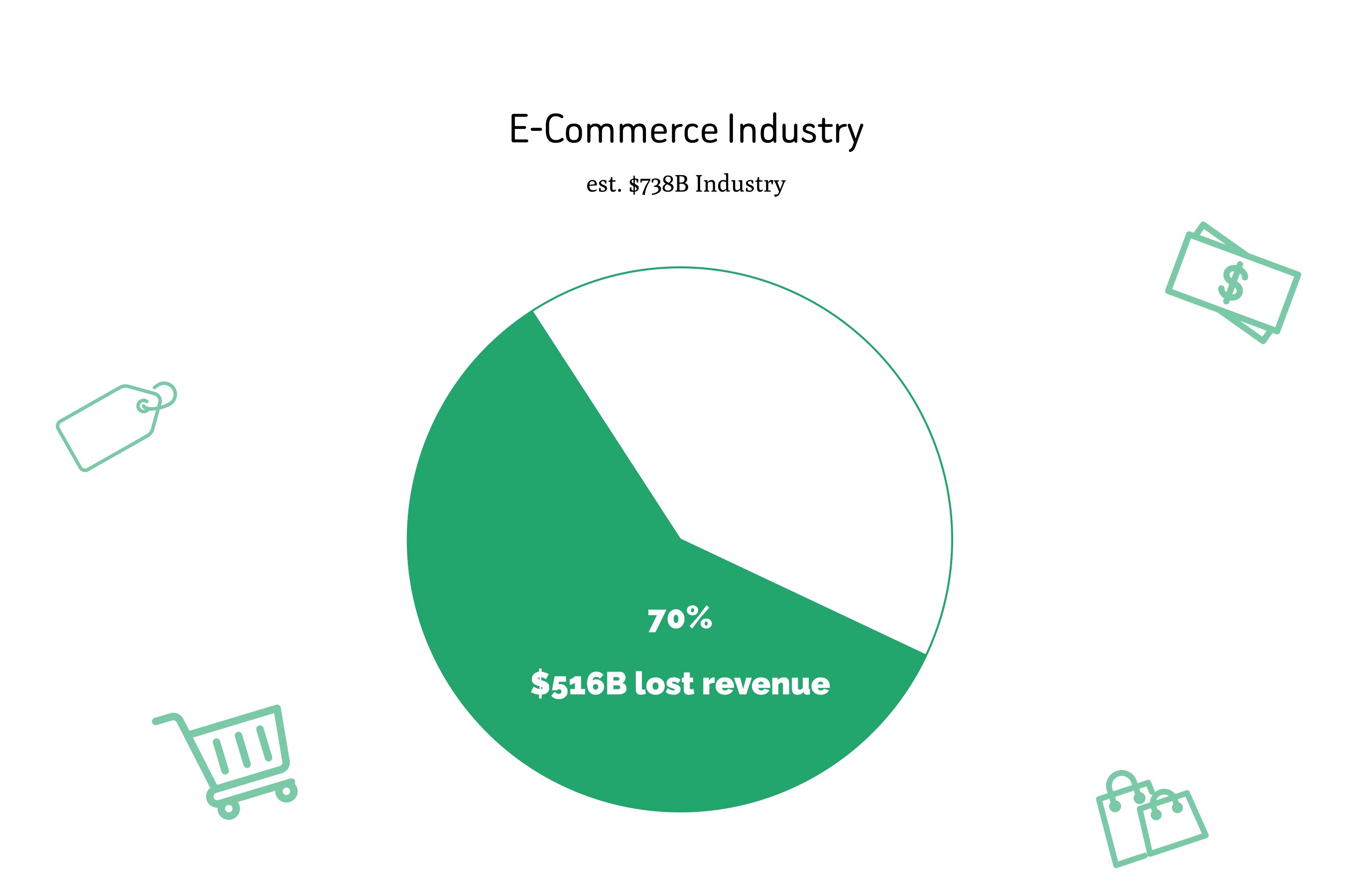
According to a study by Baymard Institute in 2023, the cart abandonment rate averaged to approximately 70%. With e-commerce sales being a $738 billion industry, a 70% cart abandonment statistic translates to roughly $516 billion in lost revenue.
Some notable cart abandonment statistics:
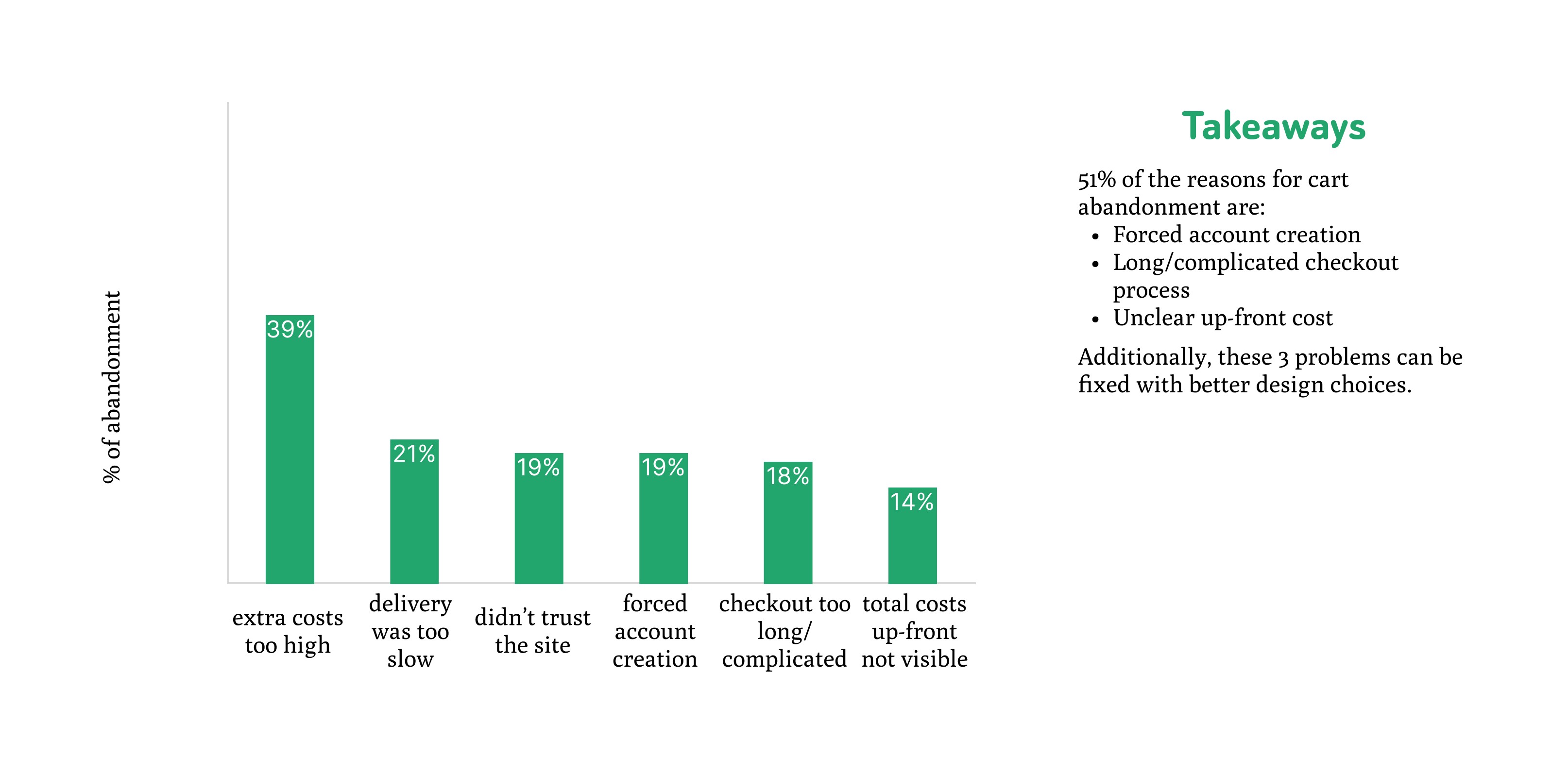
Aside from the “I was just browsing“ cases, here are the top reasons online shoppers abandon their carts:
39% extra costs too high (shipping, tax, fees).
21% delivery was too slow.
19% didn’t trust the site with my credit card information.
19% the site wanted me to create an account.
18% too long/complicated of checkout process.
14% couldn’t see/calculate total order costs up-front.
These problems could almost entirely be fixed with better design choices and solving them could grant a 35.26% increased conversion rate. With the e-commerce industry being $738 billion, that would lead to roughly $260 billion of recoverable revenue off of better design alone.
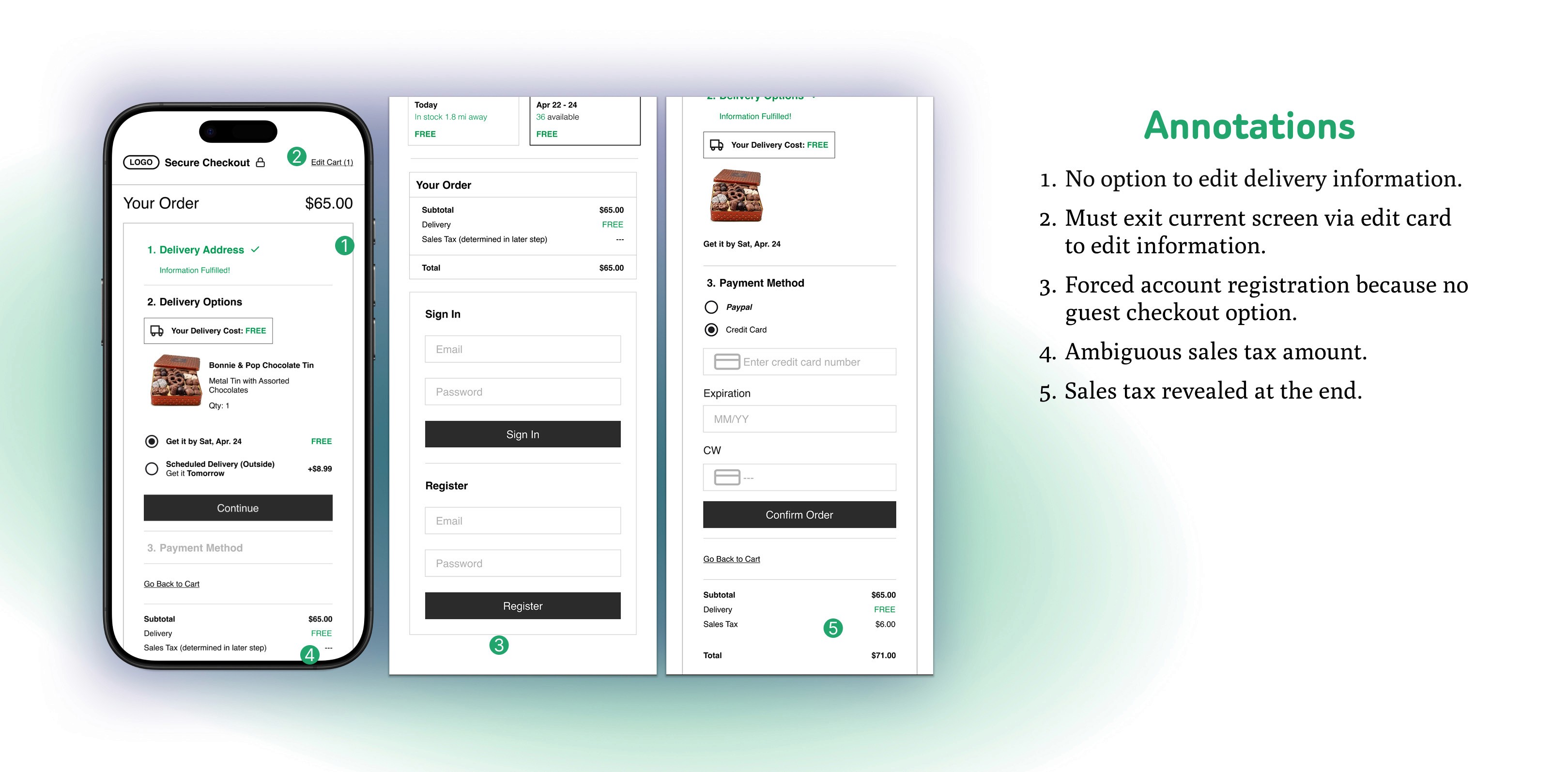
To test if shopper checkout could be improved, I built 2 prototype e-commerce website interfaces for A/B testing. One with poor checkout flow and user experience and one designed to decrease cart abandonment rates.
The design elements I decided for testing and easier checkout were:
Forced account registration before checking out.
Difficulty editing information in earlier sections without restarting the checkout process.
Hidden fees added only just before confirming the order.
Too many forms/inability to fill them out in a timely fashion.
After designing 2 prototypes, I had 5 volunteers to go test both of them and took note of the results.
In the first prototype, testers experienced:
Confusion on the My Cart screen when attempting to checkout as a guest.
Increased time spent before being able to confirm order due to multiple checkout forms.
Inability to edit information in previous sections of the checkout screen without having to return to the beginning/cart.
Sales tax being presented only at the final step of checkout.
In the second prototype, testers were able to:
Easily find and choose guest checkout.
Fill out all checkout forms with one click.
Seamlessly move between checkout sections to edit fields without restarting the process.
See the sales tax early on in the process.
Testers were able to checkout multiple times faster with the ability to auto-fill checkout forms.
They were able to checkout in even less time with a Guest Checkout option.
With a quicker and smoother checkout experience, shoppers are more likely to finish the transaction, cutting down cart abandonment probabilities.
Being able to edit forms in previous sections of checkout reduces shopper frustration and drives cart abandonment rates down even further.
Revealing extra fees at earlier stages of checkout improves trust with shoppers by being transparent.
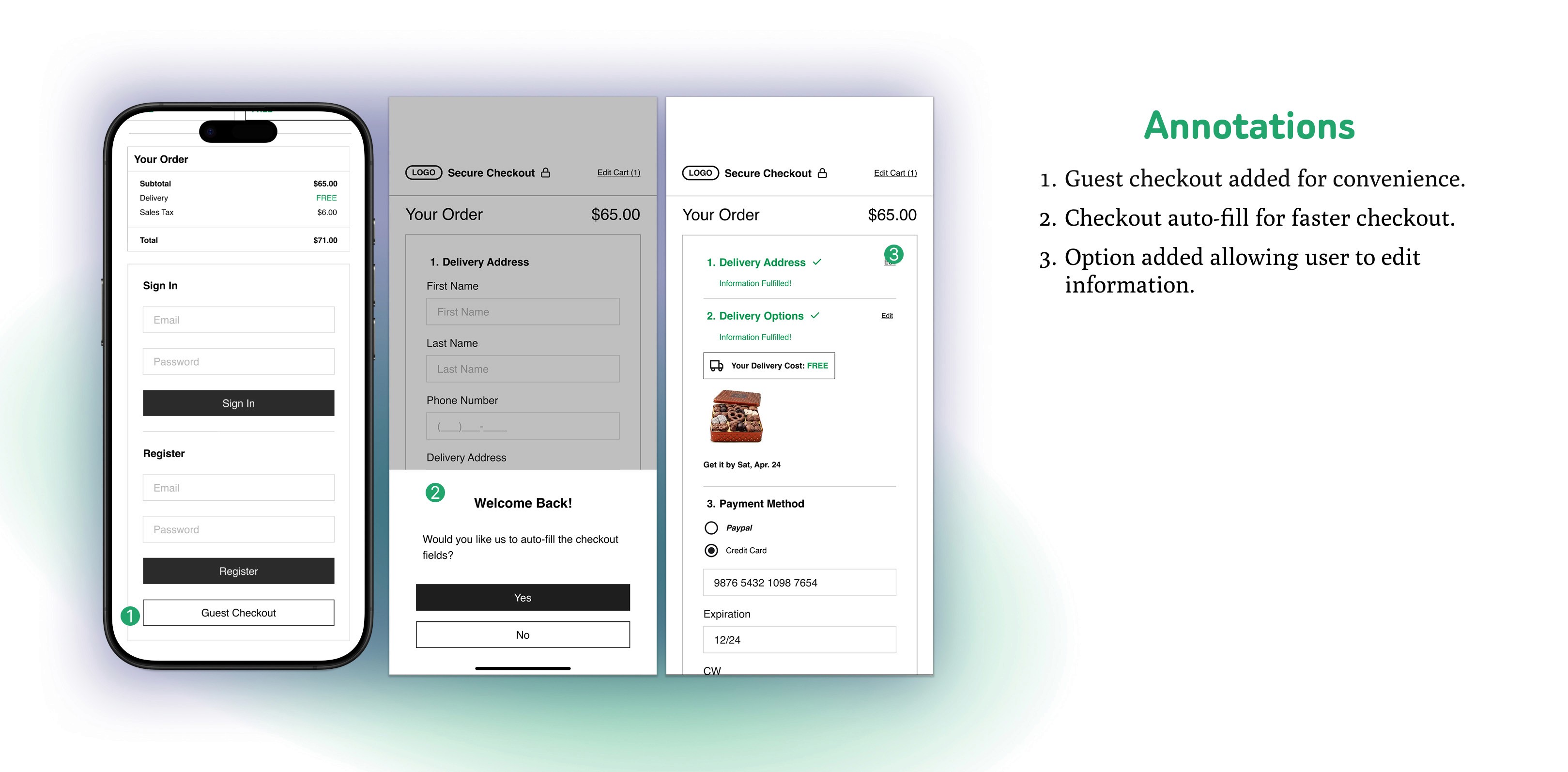
With the user testing and research data in mind, it is clear that most cart abandonment is due to easily avoidable friction. Forced account creation, additional hidden fees, complicated checkout processes, and trust issues drive 70% of shoppers away, costing the e-commerce industry over half a trillion dollars in revenue per year. But as illustrated by my A/B testing, these issues can be solved. A well-designed checkout with guest options, transparent fees, editable forms and one-click autofill streamlines transactions, eliminates frustration and builds trust. Many think these small tweaks are just aesthetic interface polishing, but these improvements would lead to an increase in conversion of about 35% and $260 billion. A multi-hundred billion dollar industry making small design errors like these would literally be leaving money on the table.